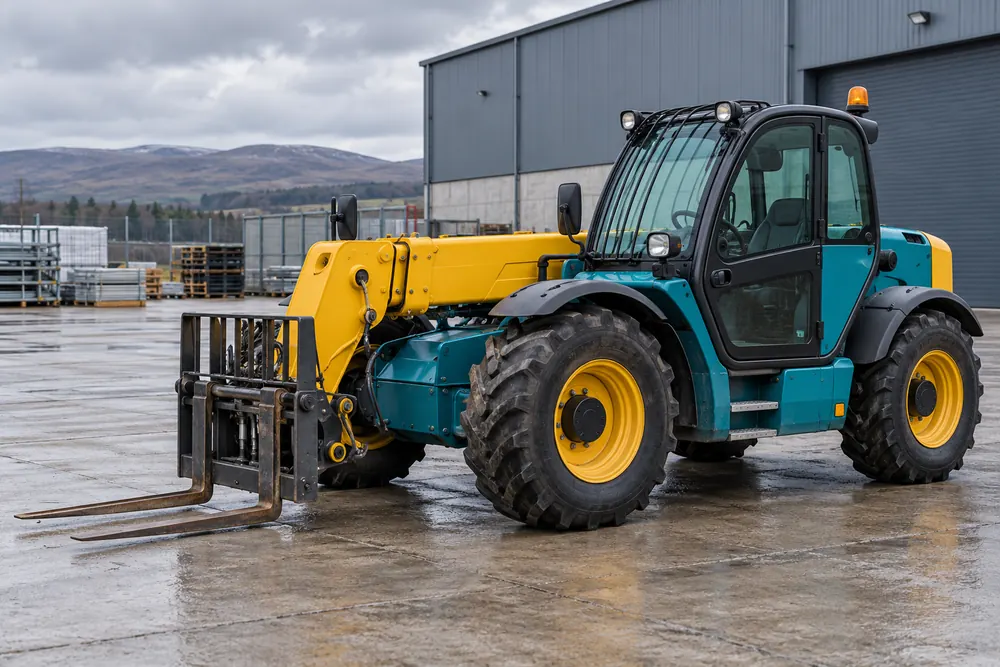
Specify The Lift Before The Machine
Telehandler hire in Glasgow supports the movement and placement of materials on commercial projects. The important question is what the machine can lift at the actual working position. A headline lifting capacity does not describe its capacity at full reach or at every height.
We take enquiries for telehandlers used by contractors, industrial businesses and site management teams. Provide the load weight, its dimensions, pickup point and final position. Include the required horizontal reach, the lift height and any obstruction between the machine and the landing area.
Confirm the load information from a reliable source. A pallet that looks similar to another can have a different weight or centre of gravity. The proposed machine and attachment must be checked against the relevant load chart for the intended operation.
Ground Conditions And Site Layout
A telehandler needs suitable ground and a safe travel route. Describe slopes, soft areas, trench crossings and recent ground disturbance. A rough-terrain designation does not remove operating limits or make the machine suitable for every surface.
Measure the access route and identify overhead obstructions. Include space for turning, any stabiliser arrangement and the receiving area for deliveries. The lifting position can be constrained by warehouse canopies, scaffolding or other contractors, even when the vehicle entrance is wide enough.
Separate pedestrians from vehicle movements. Where visibility is restricted, the site plan must address the blind areas and any need for a signaller. Agree delivery and unloading arrangements with the person controlling the work rather than relying on improvised movements after arrival.
LOLER, PUWER And Operator Competence
Telehandlers used for lifting at work fall within the Lifting Operations and Lifting Equipment Regulations 1998, known as LOLER. Lifting operations need suitable planning, supervision and safe execution. See the HSE LOLER overview for the dutyholder requirements.
PUWER also applies to work equipment. The employer or person controlling use needs appropriate equipment selection, maintenance, information and training. Hire documentation should be reviewed alongside the arrangements for daily checks and fault reporting.
The HSE telehandler guidance addresses overturning, visibility, pedestrian separation and trained drivers. The operator must be competent and authorised for the equipment used. A training card is evidence to check, alongside actual competence and familiarisation.
Confirm the relevant thorough examination report and any attachment information before use. A pre-use visual check serves a different purpose from a statutory thorough examination. Neither document replaces the planning required for the particular lifting operation.
From Specification To Handover
Begin with the commercial site postcode, dates and lift schedule. List the heaviest load and the most demanding radius or height, since these may be different lifts. State the attachment required and whether you are requesting an operator.
Review the proposed machine, attachment and load chart with the person planning the lifting work. Confirm transport access, delivery windows and the safe unloading position. Ask about the hire duration, fuel arrangements, security requirements and the procedure for extending the booking.
At handover, identify the machine and attachment, record visible condition and confirm operating information. The site team should complete its own pre-use arrangements before work starts. Stop and review the plan if the load, ground or lifting position differs from the specification.
For collection, agree an accessible parking position with the attachment safely placed. Follow the supplier off-hire process and retain confirmation. Equipment waiting for collection still needs to be protected and kept clear of other site operations.
Understanding Telehandler Hire Cost
Reach, capacity at the required radius, hire duration and transport affect cost. Attachments and operator arrangements can change the quotation. Ask whether fuel, cleaning, insurance or a damage waiver are included and how any additional charges are assessed.
A longer-reach machine is not automatically the best choice. Access, ground preparation and the actual lifting pattern must be considered together. Supply clear lift details so the quotation can address the work instead of simply listing a nominal machine class.
If the project also needs excavation or bulk materials movement, see our commercial plant hire page. Use the enquiry form to describe the loads, dates and site constraints in one place so questions can be resolved before booking.
Telehandler Hire Questions
Does Maximum Reach Mean Maximum Capacity?
Telehandler maximum reach does not mean the machine can lift its maximum rated load at that position. Capacity changes with radius, height, attachment and configuration. Provide the load weight and working dimensions so the appropriate load chart can be reviewed.
The lifting planner must confirm suitability for the actual operation before work starts.
What Telehandler Documents Should I Check?
Telehandler documentation should include operating information and the relevant examination and inspection records for the machine and attachment. Confirm the specific equipment identity and review any defects or restrictions. Your site also needs competent operators, pre-use checks and suitable lift planning.
Supplier documents support these arrangements but do not replace the hirer’s responsibilities.